
A
journey with your loved one's cancer is sometimes long . . . often
short, but the time with our animal companions is never enough. We
hope that by sharing our resources with you, we can help make your
climb up the mountain even a little bit easier, and perhaps give you
more precious moments to hug your pet, instead of pouring through
books, staring at a computer screen, and banging on every door,
looking for anything and everything to help your beloved companion.
**FAVOURITE
PRINT RESOURCES FOR CANCER PREVENTION AND TREATMENT**
 |
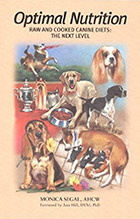
Optimal Nutrition, Raw and Cooked Canine Diets: The Next Level
by Monica Segal AHCW, Foreword by Ana Hill DVM, PhD
This book discusses feeding of the stud dog, breeding bitch before
and after whelping, new puppies, young pups in their permanent
homes, working dogs and those with different lifestyles, and senior
dogs. Also, explanations and diet samples (raw and cooked) for heart
disease, kidney disease, urinary tract stones, liver disease,
hypothyroidism, pancreatitis, Cushing’s Syndrome, Addison’s Disease,
allergies, gastrointestinal diseases, skin problems and an interview
with Dr. Greg Ogilvie (famous for the “cancer diet”) about cancer.
Includes the National Research Council (NRC) 2006 recommended
allowances (for adult dogs) on an “as fed” basis and provides new
analyses of some raw meaty bones (chicken quarters, chicken carcass,
lamb shank, lamb rib, pork rib, turkey wing and turkey thigh).
www.monicasegal.com |
 |
"Cancer Therapy: The Independent Consumer's Guide to Non-Toxic Treatment and Prevention"; (includes: Vitamins,
Minerals, Herbs, Diets, Immune Boosters, Less Toxic Drugs, Ways to
Reduce Side Effects of Chemotherapy, Research from Around the World,
Resources to Help You Make Choices, etc); Ralph W. Moss, PhD |
 |
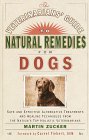
"The Veterinarians' Guide to Natural Remedies for Dogs: Safe and Effective Alternative Treatments and Healing Techniques from the Nations Top Holistic Veterinarians"; Martin Zucker
Includes:
- Natural Diet Plus Supplements: Roger De Haan, DVM
- Antioxidants Plus Chinese Herbs: Nancy Scanlan, DVM
- Homeopathy, Herbs, and Supplements: Charles Loops, DVM
- Multiple Supplement Programme: Tejinder Sodhi, DVM
- Whole-Food Supplements: Joseph Demers, DVM
- Pau d'Arco Plus Vitamin C: Maria Glinski, DVM
- Extending Life Naturally: Thomas Van Cise, DVM
- Essiac Tea: Nina Aloro, DVM and Michele Yasson, DVM
|
 |
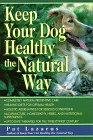
"Keep Your Dog Healthy the Natural Way"; Pat Lazarus
Includes:
- Completely Natural Preventive Care
- Healing Diets for Optimal Health
- Holistic Alternatives for Serious Conditions
- Acupuncture, Homeopathy, Herbs, and Nutritional Supplements
|
 |
Published in the fall of 2004, this book is a "must
read" for those facing the cancer challenge, with their beloved dog.
Dr. Allen M. Schoen, author of
"Kindred Spirits: How the Remarkable Bond Between Humans and Animals
Can Change the Way We Live," writes, "This book is filled with great
wisdom and support for all animal lovers dealing with the diagnosis
of cancer in their canine friend. Read it and recognize all that you
can do to help support your dog. This book will be of great benefit
to animal caretakers and their kindred spirits!"
Terry Winkelman, for "Dog Fancy" magazine, writes, "Gentle,
accessible, and full of hope, Kaplan's book offers an understandable
overview of cancer pathology and treatment. With contributions from
10 different veterinary experts, the text covers supplements, diets,
chemotherapy, and both traditional and holistic approaches. Anyone
in the unfortunate position to need this information will benefit
greatly from her reporter's skill at research, her editor's gift for
making tough material readable, and her personal experience..."
/color>http://www.HelpYourDogFightCancer.com/HowToOrder.html . |
 |

The Healthy Pet Manual
A Guide to the Prevention and Treatment of Cancer Deborah Straw
by
Gary Kowalski (Foreword),
Deborah Straw (Author)
Keeping animal companions healthy and happy is the number one
priority of pet owners. Having lost four animals to cancer, author
Deborah Straw became frustrated by the lack of information about
what was causing the disease and wanted to know what she could do to
treat and prevent it. This thorough and comprehensive guide is the
result of her search for answers. It provides readers with the
knowledge of how to ward off the unforeseen causes of cancer and
protect the safety and health of their pets. |

Inspired by the September 2002 publication of Jasper's Day, a
wonderfully poignant new children's book, about euthanasia and
loss, written by Marjorie Blain Parker, and illustrated by
Canadian artist, Janet Wilson, The Land of Pure Gold (www.landofpuregold.com),
held a very special contest for Young Cancer Bridge Kids.
While Jasper, the Golden depicted in Marjorie's book, succumbed
to cancer at a senior age, there are many young Goldens, like my
beautiful Blues, who are being diagnosed with cancer, at a very
young age. 'Marjorie Blain Parker's tender story, is filled with
smiles, tears, and the joy of special memories. Janet Wilson's
gentle pastels, capture the depth of love, shared by a boy and his
dog. Together, they speak of acceptance, remembrance, and the
importance of cherishing life's every moment.' (from the inside
cover of Jasper's Day).
If you would like to see the winners of this very special
contest, please visit
http://landofpuregold.com/jasper.htm
To purchase your own copy of Marjorie Blain Parker's Jasper's
Day from Amazon.ca, please
click here
|
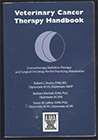
"Veterinary Cancer Therapy Handbook: Chemotherapy, Radiation Therapy, and Surgical Oncology for the Practicing Veterinarian"; Barbara Kitchell, Susan M. Larue, Robert Rooks

"Reishi Mushroom: Herb of Spiritual Potency and Medical Wonder"; Terry Willard, and Christopher Hobbs
"The Whole Dog Journal: A Monthly Guide to Natural Dog Care
and Training"; Subscription Services: 1-800-829-9165;
wholedogjl@palmcoastd.com
October 1998: Dogs and Cancer; There are almost as many
types of cancer afflicting our dogs as there are breeds. What
are the risks for your dog, and what can you do to reduce them?
November 1998: The Latest Cancer Treatments: WDJ looks at the newest approaches -- conventional and alternative -- to defeating canine cancer.
December 1998: Eating Right to Fight Cancer; Experts
describe the components of a diet that can help defeat the disease, as
well as a diet that can help prevent cancer in the first place.
August 2000: Our Answer to Cancer; A WDJ reader shares
an amazing story about her dog's apparent remission from cancer,
thanks to two additions to her diet.
"A Review of Herbal Cancer Therapy" (includes: Fats
and Oils, Supplements, Herbal Therapies for Cancer, Essiac, Hoxsey
Therapy, Cat's Claw, Medicinal Mushrooms, Lymphoma and Diet, Cancer
and the Lymph System, etc);
Prepared for Jean's Greens Herbal Tea Works and Herbal Essentials, by
C. J. Puotinen
"Cancer: The Essential Guide to Natural Pet Care for Dogs
and Cats"; Cal Orey
"Homeopathic Medicine for Dogs: A Handbook for Vets and Pet Owners"; H.G. Wolff, MVSC
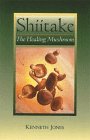
"Maitake, King of Mushrooms: The Amazing Broad-Range
Healing Powers of an Ancient Food and Remedy"; Shari
Lieberman, PhD and Ken Babal, CN
Dr. Kidd's Guide to Herbal Dog Care; Randy Kidd, DVM, Ph.D.
Nutritional and supplemental support, including information about the
use of ESSIAC and the Hoxsey Formula.
Maitake King of Mushrooms; Shari Lieberman, Ph.D., and Ken
Babal, C.N.
"K9 Kitchen . . . Your Dog's Diet: The Truth Behind the Hype"; Monica Segal AHCW
Published by Doggie Diner Inc., 2002; Available at www.doggiediets.com
Monica Segal received her certification in Animal Health Care from the University of Guelph. She continues to study in the areas of animal nutrition, physiology, parasitology, and disease. Monica's articles on canine nutrition, have appeared in several publications, and she is frequently interviewed on radio and television stations. Monica has formulated customized canine diets for clients throughout North America, Europe, and Australia. She enjoys working closely with veterinarians, offering assistance in solving diet related health issues. She hosts the internet discussion group K9 Kitchen, and conducts seminars and workshops,
by invitation. Monica lives in Toronto, Ontario, with her husband Morley, and their canine companions, Zoey and Cassie.
Lymphoma
by
Jeff Grognet, DVM, BSc (Agr)
Lymphoma, also known as
lymphosarcoma, is an all too common form of cancer in our canine
companions. Because it originates from cells of the lymphoid system
(the cells that fight infections), it quietly spreads throughout the
body. Not until these cancerous cells have penetrated every corner
of the body does it cause symptoms. Now, the subtle attack by the
cancer leads to a raging battle for survival.
The annual incidence of canine
lymphoma is reported as high as 30 cases for every 100,000 dogs.
Most veterinarians diagnose this cancer in at least one dog every
year. Lymphoma typically strikes middle-aged dogs between five and
ten years of age and is particularly prevalent in Boxers, Golden
Retrievers, Saint Bernards, Scottish Terriers, Airedales, and
Bulldogs.
The triggers for lymphoma are
unknown. Some specialists theorize that a retrovirus is to blame.
Retroviruses are a proven cause of lymphoma in cats and cattle so it
isn't hard to imagine that a variant exists in dogs but it has yet
to be found.
A few researchers have implicated
2,4-D as a causative agent in canine lymphoma. One study showed a
two-fold increase in the incidence of lymphoma in dogs that lived on
property where owners applied the herbicide 2,4-D to their lawns for
four or more consecutive years. As in people afflicted with this
cancer, electromagnetic forces, such as those generated by high
voltage power lines, also might be a trigger for lymphoma.
The most apparent symptom of
lymphoma in dogs is swollen lymph nodes. The easiest "nodes" to feel
are below the ears and in the crease behind the knee. Though these
nodes can be enormous, most dogs are not ill when the enlargement is
first noticed. As the disease progresses, the dog acts ill – his
appetite falls off and he loses weight.
In some dogs, the lymph nodes that
can be felt on the outside of the body remain a normal size, while
cancer cells flourish in the lymph nodes inside the body. If the
intestinal nodes (and intestines) are involved, the affected dog
will usually vomit and/or have diarrhea. When the nodes around a
dog's lungs are invaded with cancer cells, the dog may have
difficulty breathing or he may cough.
The easiest way to confirm the
presence of cancerous cells in a lymph node is to insert a needle
into a swollen gland, aspirate a few cells, and spread them on a
microscope slide for viewing. This procedure is called a fine needle
aspirate. Alternatively, an enlarged lymph node can be surgically
removed then sent to a veterinary pathologist for analysis. Lymphoma
in the chest or abdomen is more difficult to diagnose. Radiographic
and ultrasound imaging can be used to identify the presence of
abnormal masses but a biopsy is needed to make an accurate
diagnosis.
Once a diagnosis of lymphoma is
made, owners need to decide whether or not to begin chemotherapy.
Without treatment, a dog with lymphoma lives (on average) a short
four to six weeks following diagnosis. Though chemotherapy is rarely
curative, it does offer most dogs a good chance for remission and a
good quality of life.
The simplest and most commonly
used chemotherapeutic agent is prednisone. When given at high doses,
it is toxic to tumour cells and it also stimulates the patient's
appetite. Overall, treated dogs feel better – they are more active
and have a better attitude. Prednisone therapy alone offers
significant short-term control of the symptoms of lymphoma but it is
only effective for one or two months. Eventually, dogs on prednisone
start to lose weight and feel lethargic. Prednisone is also a
one-way street. If an owner chooses to initiate intensive
chemotherapy after prednisone has already been started, the outcome
will be less favourable than if the other drugs were given at the
time that prednisone was first administered.
Veterinary oncologists
(veterinarians who specialize in cancer) have studied canine
lymphoma extensively and have devised many chemotherapeutic
protocols. The best remission rates are obtained when several drugs
are given together. A multi-drug regime utilizing vincristine,
cyclophosphamide, doxorubicin, L-asparaginase, and prednisone offers
complete remission in 85 percent of dogs and a median survival time
of about 12 months. Eventually, the cancer starts growing again and
the lymph nodes will swell with tumour cells, but with this
protocol, one in five dogs live longer than two years.
Chemotherapy drugs are given
initially at high doses in an attempt to achieve remission. The
frequency and dose is then lowered to a maintenance schedule that
keeps the cancer in check. Chemotherapy is a frightening word for
many dog owners because they know about its horrific side effects in
people. In dogs, chemotherapy drugs for lymphoma are used at much
lower doses than in people so canine patients feel good throughout
their treatment.
copyright 2004, Jeff Grognet ©
Jeff Grognet is a veterinarian practicing in Qualicum Beach, BC, Canada.
He utilizes both traditional and alternative therapies (acupuncture and
VOM). Jeff has written extensively for publication. He also teaches two
courses on the Internet - Becoming a Veterinary Assistant and Canine
Reproduction. These can be found at www.ed2go.com by clicking on "Course
Catalog" and "Health Care, Nutrition, and Fitness".
Author must be contacted for reprinting the article.
Healthy
Paws Initiative
Background and Purpose
The City of
Toronto is among the more than 60 municipalities that have a
pesticide by-law to limit the cosmetic (non-essential) use of
residential pesticides. Homeowners, tenants, businesses and lawn
care companies must comply with the by-law. A critical step to
ensuring compliance with pesticide by-laws is to educate
residents on how to solve their pest problems without using the
banned pesticides.
To
reach those living in suburban areas of Toronto who have a lawn
or garden, the Healthy Paws Initiative created by the Canadian
Centre for Pollution Prevention
www.c2p2online.com
targets suburban pet owners, particularly those with dogs. In
the City of Toronto, more than 60,000 dogs use more than 1,000
dog parks. Outdoor pets are vulnerable to lawn chemicals since
they breathe closer to the ground, lick their paws and coat, and
are more likely to roll around in, crawl on, or even eat the
grass that’s been treated with pesticides. They are also
vulnerable due to their small size. Pet owners can also be
exposed to pesticides when they handle their pets.
Documents on Pesticide Exposure and Dogs
The
two page
Fact Sheet
compiled by the group Pesticide Free Yards in Calgary provides
information about what to do if your pet is exposed to
pesticides. Also included are lots of natural gardening tips.
Their website
www.pesticidefreeyards.org
provides even more information about Pesticide Free Yards.
This
eight page article called
Dogs and
Pesticide Use
from the Alabama Cooperative Extension System reports on a wide
variety of pesticides and their impacts on animals. Pest control
methods that do not involve pesticides are also provided.
An
academic article titled Herbicide exposure and the risk of
transitional cell carcinoma of the urinary bladder in Scottish
Terriers was published in the Journal of American Veterinary
Medicine Association on April 15, 2004. The findings suggest
that exposure to lawns and gardens treated with herbicides is
associated with an increased risk of cancer in Scottish
Terriers. The
full article
can be viewed here.
Objectives and Targets
With
the help of volunteers, a minimum of 500 dog owners will be
reached through the Healthy Paws initiative. Over a four day
period at four different parks around the GTA (Greater Toronto
Area) dog owners will be provided with information and
incentives to encourage reducing or eliminating pesticide use on
residential gardens and lawns.
Don
Russell Memorial - Kipling and Lakeshore
Friday June
10, 1-4 pm
Sherwood Park - Eglinton and Mt. Pleasant
Saturday
June 11, 10am -4 pm
G
Ross Lord - Dufferin and Steeles
Sunday June
12, 10am -4 pm
Morningside - Morningside and Ellesmere
Monday June
13, 1-4 pm
Commitment from dog owners to try pesticide free lawncare will
be documented. The results of this initiative will be reported
through the local media. Upon completion of this outreach, ideas
will be pursued to further sustain the initiative.
Strategy
•
Volunteers
To help get
the word out and document the successes of the outreach
activities volunteers have committed 3 to 30 hours. Their time
will be spent talking with dog owners in the parks about the
benefits to dog and human health and the environment of reducing
pesticide use on their lawns and gardens through natural
gardening methods. Additionally volunteers will provide
information about the City of Toronto’s pesticide by-law.
•
Veterinarians
Veterinarians in the GTA are being approached to have the
Healthy Paws flyer in their office or provide their expert
opinion by way of testimonial about dog exposure to pesticides.
Interested vets will also be encouraged to sign a letter of
support for the campaign.
•
Literature
Both a newly
created
Healthy Paws
flyer
and already existing information from the City of Toronto will
be available for dog owners during the outreach days.
•
Community Based Social Marketing (CBSM)
Techniques
outlined by the principals of Community Based Social Marketing
will be used to help achieve bahaviour change among the
residents of Toronto. Techniques such as;
Commitment -
Asking indiviudals to agree to a small request
Prompts -
Reminders
Norms -
Demonstrating that others in the community are going pesticide
free
will be used
during the outreach campaign. More information on CBSM is
available on this website
www.cbsm.com
• Key
Partners
-City of
Toronto
The City of
Toronto's pesticide by-law went into effect April 1, 2004. The
by-law restricts use of pesticides on public and private
property. It permits use of certain lower risk pest control
products. The by-law also permits use of pesticides to control a
pest infestation. The City does not regulate retail sales of
pesticides in the City of Toronto and as such retailers are
permitted to sell products that consumers should not be using
under the by-law.
Now
in the second year of the by-law, Toronto Public Health and
other City departments continue to develop public education
materials intended for a wide range of audiences. Key messages
in the resources include achieving pesticide reductions through
sustainable gardening maintenance practices (including
integrated plant health care strategies and using alternatives
to pesticides) as well as the message that Toronto has a
pesticide by-law.
Results
(coming at the end of summer 2005)
Key Contacts
Healthy Paws Initiative, C2P2 - Kady Cowan
City
of Toronto, Public Health - Rich Whate
Dog Owners Reduce Pesticide Use to Support the Healthy Paws
Initiative

A
growing number of people with outdoor pets are concerned about the
impact of toxic substances, such as pesticides, on the health of
their pets, themselves and the local ecosystem.
Outdoor pets are vulnerable to lawn
chemicals because they breathe closer to the ground, are small in
size, lick their paws and coat, and are more likely to roll around
in, crawl on, or even eat the grass that’s been treated with
pesticides. Pet owners and children may also be exposed to
pesticides when they handle their pets.
The City of Toronto is among more than
60 municipalities in Canada that have a pesticide by-law to limit
the cosmetic (non-essential) use of residential pesticides. A
critical step in ensuring compliance with pesticide by-laws is to
educate residents on how to solve their pest problems without using
the banned pesticides.
This
spring, the Canadian Centre for Pollution Prevention (C2P2) launched
the Healthy Paws Initiative, an educational outreach
campaign, with the support of the Environmental Protection Office of
Toronto Public Health. Rich Whate, Health Promotion Consultant with
the Environmental Protection Office of Toronto Public Health
explains, Having community organizations use unique strategies such
as the Healthy Paws Initiative helps reach a wide variety of Toronto
residents. Increasing awareness of the Pesticide By-Law and
encouraging residents to make changes that will help protect the
environment is good for animal and human health.
C2P2
is coordinating outreach efforts at local dog parks in the
communities of Etobicoke, Downsview, North York, and Scarborough to
target dog owners directly. Volunteers are encouraging dog owners
to reduce pesticide use by informing them about the benefits to dog
and human health and the environment of reducing pesticide use on
their lawns and gardens, providing natural gardening tips, and
offering information about the City of Toronto’s pesticide by-law.
The
outreach efforts were specially designed using community-based
social marketing techniques explains Kady Cowan, Coordinator of the
Healthy Paws Initiative. Reflecting on the benefits of this
approach, Cowan explains Techniques such as prompts or reminders
and making natural gardening activities normal aid in achieving the
behavioural changes required to reduce pesticide use, which is good
for dog, human and ecosystem health, and supports the Toronto
pesticide by-law.
Many
residents are thrilled with the results of natural gardening and are
eager to protect their pets’ health. Carol Coiffe, Healthy Community
Advisor with the Fairlawn Neighbourhood Centre in Toronto supports
the need to pass on this message to neighbours, friends and local
veterinarians. I encourage animal lovers to share the information
and guidance provided by the Healthy Paws Initiative with others -
to sustain the momentum of change. Together we can limit
unnecessary exposure to pesticides.
C2P2
is also looking for support from local veterinarians and other
professionals working with dogs to help educate pet owners on the
health benefits of reducing their pet’s exposure to lawn chemicals.
Opportunities to get involved include: distributing outreach
materials to clients and promoting the messages of the Healthy Paws
initiative within client newsletters.
For more details on this initiative contact Kady Cowan by e-mail at
kady@c2p2online.com
or toll free at 1-800-667-9790.